
First, let's address the question of whether a puppy needs a bed at all. Without a doubt: yes! In our opinion, a puppy should even have its own room. Now, 'room' is a bit of an exaggeration; what we mean is a fenced-off area in the house through which the puppy can see people and what's happening around it, but cannot go out during sleeping time. Read on to find out how you can prepare a little room or space for your puppy here. Naturally, you won't want your puppy to be constantly visiting the vet due to suffering from inflammation, joint injuries, pain, and hair loss in areas that come into contact with hard floors, so you will offer your puppy a suitable resting place – a dog bed.
Dogs are denning creatures by nature, instinctively seeking out warm and secure spots they can call their own. In the wild, they wouldn't choose cold ground; instead, they'd gather leaves for warmth or find a soft patch of earth overgrown with grass, which they'd tread down. Dogs don't need overly soft, complicated beds that sink; they need to rest on a firm surface; beds that are too soft and plush don't offer the support required for comfortable rest and healthy joints. Consider an older dog, a canine in their mature years, who has spent their whole life lying on an overly soft surface, in a seemingly comfortable, fluffy bed, but now struggles to get up and out of it.
This doesn't mean you should move them to the floor – it's too hard and offers no joint support. Instead, it would be better if your dog had a memory foam bed that conforms to their body to relieve pressure, distribute their weight evenly, and provide custom comfort. Such a bed isn't just for older dogs: memory foam offers just the right support for joints and muscles for a lifetime of comfort, making it ideal for younger, growing dogs too.
Mistakes we make when choosing a dog bed:
- Choosing the wrong bed size
- Choosing the wrong bed shape
- Choice of incorrect materials
- Choosing the wrong mattress softness/firmness
- Choosing a bed that is not easy to maintain hygiene
- Choosing a bed that is difficult to carry
Bed size
There's nothing worse than choosing a bed that's too small; imagine wanting a good night's sleep, but your legs are hanging off the bed, or you have to curl up into a ball and stay in that position all night. Before buying a bed, measure your dog and choose the right size bed for your puppy. Measure your puppy from head to the base of the tail. The size of the sleeping surface, not the entire bed with its edges, should generally be at least 10 cm longer than the puppy's measured length.
What kinds of dog beds do we know and their properties?
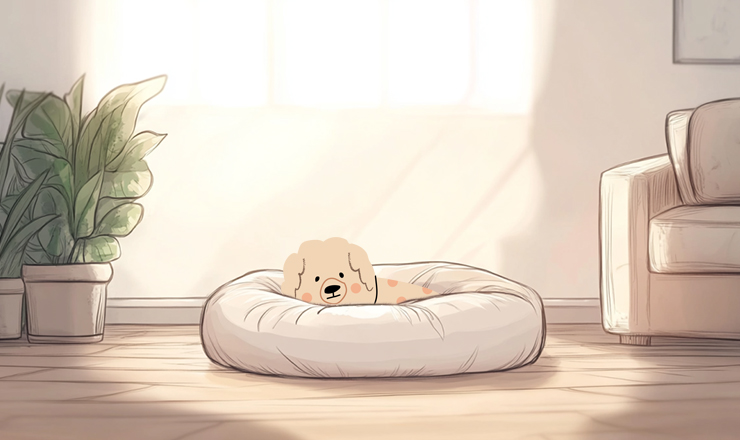
Polyester fibre filled base
A plush bed or cushion might look very attractive, fluffy and comfortable. But beware! Such a bed will not provide your dog with support or protect his joints. In the shop, place such a bed on the floor and push into it with your fist; if you feel the floor beneath even with slight pressure, then you'll know that such a bed lacks the functionality you're looking for for your dog. Think especially of older dogs, as they will find it very difficult to get up from such a bed. For dogs of all ages, however, it's true that they will sleep in a forced posture in such a bed.
Furthermore, if the duvet cover is fuzzy or made from other soft and fluffy synthetic materials, you should be aware that even after repeated washing, it will be very difficult to get rid of unpleasant odours. Usually, low temperatures are also recommended for such covers, making it harder to maintain hygiene. Edges and hidden corners, in the case of a divan bed, quickly become a haven for dirt and microbes that cause unpleasant odours and harm both you and your dog.
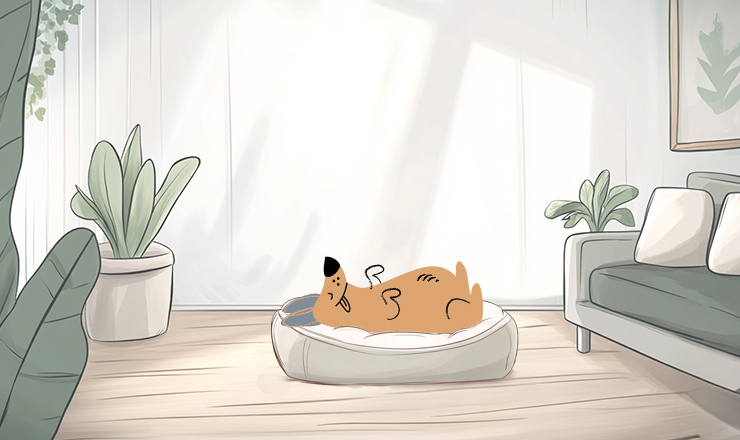
‘Nest’
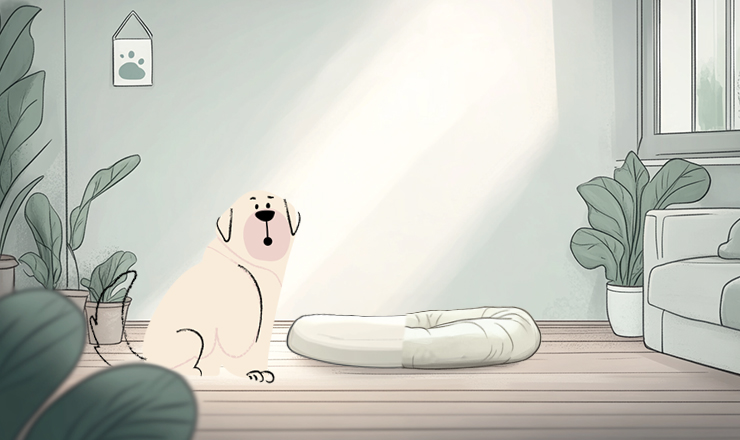
Also known as a ‘cuddle bed’. The bed has a raised rim around the sleeping area, offering your dog a sense of security and warmth that envelops them from all sides. This is different from a plush bed, where the rim forms around the dog as they sink into it. The first type of bed, a nest bed, consists of a base with stable, attached rims. Always choose one filled with foam, rather than plush, as foam provides better support for your dog. It's particularly suitable for dogs who tend to sleep curled up in a ball; you can read about sleeping positions here. For larger, more relaxed dogs who like to stretch out and expose their bodies, such a bed might not be the most suitable, as your dog will quickly fall asleep in an unnatural position.
If your dog often lies next to the bed to stretch out, then this is probably not the best choice. It’s also interesting to note that some dogs, when offered a sufficiently large, flat bed with a raised edge on just one side, will lie on the side without the edge, with their head hanging off the bed onto the floor. If they’re happy with this, let them do so and provide them with a bed without a rim. Above all, when buying a bed like this, pay close attention to the size – always measure the size of the sleeping area itself, not the entire bed including the rims! When choosing a nest-shaped bed, don’t forget about hygiene either; beds with a rim have corners where dirt and hair can accumulate, so you’ll need to clean this type of bed more frequently. If you’re travelling and taking the bed with you, bear in mind that a nest-shaped bed can be slightly heavier and more awkward to carry.
Convertible bed
A combined bed is a nest bed and a mat in one. It was created precisely because it can sometimes be difficult to decide whether your dog prefers a bed with edges or a flat bed. The idea behind the combined bed is that the edges can be flattened by opening the zips. This can be done on any side or all sides as desired, thus creating a larger mat. The problem with this is that lighter combined beds are made from softer fibres that don't offer proper support for your dog, while firmer beds are heavy and difficult to transport due to all the elements. You will spend quite some time taking off the bed cover to wash it, and even more time putting the bed back together. The edges and hidden corners, in case of a complicated bed assembly, quickly become a habitat for dirt and microbes, which cause unpleasant odours and harm both you and your dog.
Dog lounger
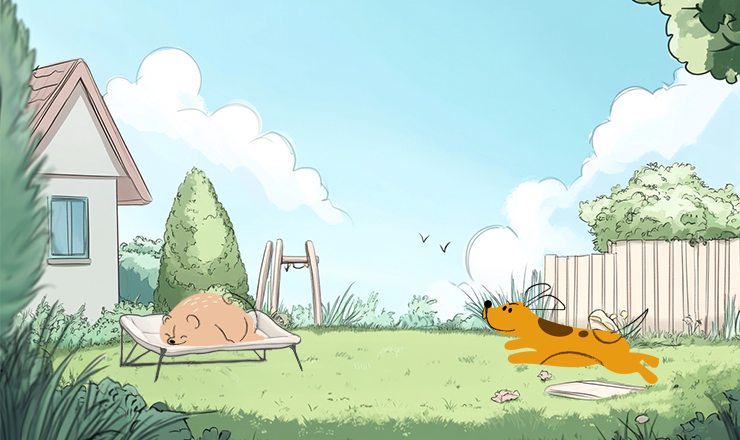
A dog lounger isn't really a bed, it's a lounger. It's solely intended for resting and prevents your dog from coming into contact with dirty and wet floors. A lounger that is positioned higher off the ground allows a guard dog a better overview of the situation, which is why some guard dogs really like them. You can place it indoors or outdoors as it's mostly made from waterproof and durable materials (steel frame and plastic fabric). The fabric acts against heat retention and is very breathable, which is particularly useful in the summer. In winter, however, it's better to place a warm blanket on the lounger. Your dog will find it difficult to fall into a deep sleep on the lounger, and in addition to the lounger, you will need another bed where your dog can sleep. Read about the importance of sleep for dogs here.

Dog mattress
This is a dog bed that resembles a miniature human mattress in shape, meaning it is flat and oblong, without stitched edges and no compartments. The so-called mattress-style dog bed is the closest to a resting place an animal would choose in nature. Not too fluffy or soft, it doesn't sink, it's flat and has no headrests. Owners will also be most satisfied with this type of bed when choosing one, as it is the easiest to maintain and clean. You will mostly find foam covered in a comfortable, soft material in shops, so always check the composition of the layers or lightly squeeze the bed with two fingers; if your fingers come together without much force, it's cheap foam that won't offer support to your dog, so it's better not to buy this type of mattress.
Better mattresses have a denser foam with an added layer of dense memory foam, and such a bed will provide your dog with the support it needs, both for a puppy during healthy development and for healthy joints, as well as for an older dog whose years are already causing problems with walking and getting up and down. If the foam in such a bed is covered with a water-repellent and stain-resistant material, that's an added plus. This will reduce the chances of microbes settling in the foam, and you will find it easier to maintain the bed. A flat and not too soft mattress with quality filling and cover is a bed you definitely can't go wrong with, and your dog will sleep on it for its entire life. In our shop you’ll find these beds in a range of sizes and firmness levels, complete with covers for easy hygiene maintenance. As we firmly believe that your dog, just like you, will only sleep well on natural materials, we offer a selection of bed covers made from 100% natural materials.
Be aware! There are a huge number of fillings on the market for various products, but not all of them are intended for daily, near-direct use, such as lying or sleeping on the product. Foams of questionable quality can cause respiratory and skin health problems, so we advise you to buy products that have traceability – what materials were used and where the product was manufactured. Here you will find dog beds with foam that are made in the EU from tested materials and are designed for your pet's comfort.
Browse our offerings: dog beds, washable bedding, soft blankets, natural pillows, fashion accessories, and cleaning agents.
Sweet dreams to your puppy!