

More and more dog owners are delving into the search for the right food for their puppy. Vets recommend this and that kibble, most from their own shops, while various brands online promise high-quality, super protein and fibre products that don't cause stomach problems or allergies and are made for your puppy's long life. But can kibble really keep these promises? The fact is, there is no kibble on the market that doesn't fall into the category of highly processed food. That's just how it is. In our fast-paced lives, we look for shortcuts and want a ready and complete meal to go from the bag into the dog's bowl. And kibble offers us this convenience. 1, 2, 3, the puppy is full and we move on. But have we really delved into what our puppy enjoys every day? Have we considered that in the long run, we could have serious problems that will ultimately demand even more of our time (as there are no shortcuts here) and, last but not least, money?.
Ultra-processed and heat-treated food
Briquets are cooked at very high temperatures, which often destroys:
- Natural vitamins
- Digestive enzymes
- Healthy fats and amino acids
You won't believe it, but manufacturers often have to spray synthetic nutrients back onto food afterwards to make up for the loss and be able to say their product is high in nutrients again.
And what about cold-pressed kibble? This is a version of kibble where the food isn't processed at 150-200°C, but at lower temperatures between 40-80°C. Sounds much better, doesn't it? And if you have no other choice, then it is! However, with cold-pressed food, they don't press fresh meat and other fresh ingredients; it's still pressing food that has been overcooked, dehydrated, or otherwise mechanically processed.
Furthermore, dry food contains very little water (~10 %), whereas dogs naturally eat food that is rich in moisture (such as meat). This can put a strain on their kidneys, particularly in the long term.
When dry food is stored for a long time, oil oxidation often occurs. If we delve into a bit of chemistry, this can happen very quickly. For omega 3 fats, even light is enough. Due to the oxidation process, even the best oil can spoil and cause harm to the body.
For puppies suffering from allergies, kidney problems, and stomach issues, feeding them tinned food is simply not recommended. If you can spare some time to cook for your furry friend, you're well on your way to ensuring a healthy life for them and reducing the risks of serious illnesses. Cooked meat dishes can usually be stored in the fridge for a few days or frozen, meaning you won't have to cook every day. The routine can become so simple that you'll even enjoy it and become a true master chef, constantly developing something new. For a chef, there's no better reward than a satisfied diner who licks their lips for a long time and thanks you for the delicious meal with a wagging tail and an incredibly cute look. If you think this isn't for you, at least try it. Stick with it for a few days, and if it truly doesn't fit into your daily life, you've at least shown good will. Below, you'll find simple recipes and little cooking secrets so you can transform into a canine nutrition master overnight.
And don't forget: after a good meal, a suitable rest is in order. If your pet doesn't yet have a quality bed made from non-toxic materials that offer support, look for one at Bonaparte Fortune.
Before we get cooking, here are a few important tips for your homemade doggy kitchen
A balanced diet is important. Dogs require certain vitamins and minerals, which can easily be missed if you cook a monotonous diet. Rotate protein sources: chicken, fish, beef, game. Some days, offer fresh meat too (if your dog tolerates it, test with a small amount). We recommend adding multivitamin supplements for dogs to their diet.
It's good that you avoid foods that are not suitable for dogs and can cause problems: onion, chocolate, grapes, raisins, macadamia nuts, avocado.
What about the daily food quantity?
An adult dog
2 – 3% of the dog’s ideal body weight in food per day, divided into two meals.
For example:
- 10 kg dog → 200g–300g of food per day. So, 2 x 100g / 150g.
- 25 kg dog → 500g–750g of food per day. So, 2 x 250g / 375g.
The quantity is for a balanced diet. If you add any snacks during the day, take this into account with the meal portions.
Please also note that the quantities are for an average, active dog. Very active and competitive dogs will need a slightly larger meal, while home-loving couch potatoes will need a little less.
Puppy
5 – 10% of the dog’s ideal weight.
For example:
- 2 kg puppy → 100g–200g of food per day. So 2 x 50g / 100g.
- 10 kg puppy → 500g–1000g food per day. So 2 x 250g / 500g.
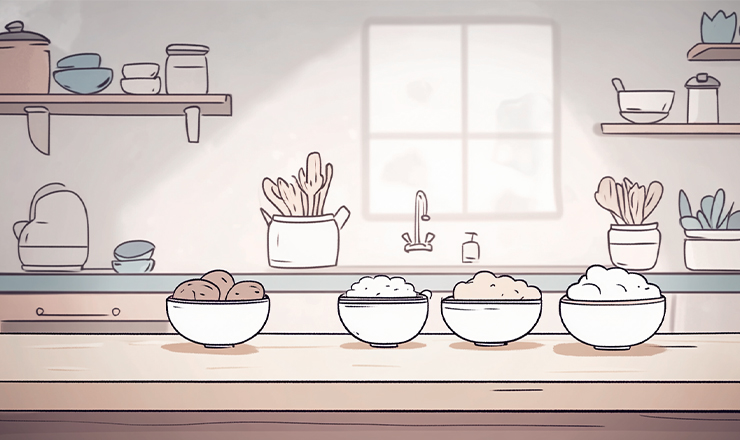
RECIPE 1: Chicken with rice – digestive friendly
Ingredients:
- 1 kg chicken breasts (cut into pieces)
- 1 cup of rice (preferably brown or red)
- 1 grated carrot
- Half a cup of peas (frozen or fresh)
- Herbs (optional and to taste): parsley, basil
Place all ingredients in cold water and cook over a moderate heat until the rice is cooked.
Wait for the dish to cool to room temperature, weigh it and serve (store leftovers in the fridge for up to 3 days, or you can freeze the dish).
Useful tip 💡
This is a fairly classic recipe that comes in handy, especially on days when your dog has digestive or stomach problems. If your dog has diarrhoea that just won't stop, replace the rice with butternut squash and mash it cooked. This will stop the diarrhoea within a day, but if even this doesn't help, you must seek veterinary assistance.
Recipe 2: Beef and sweet potato
A complete meal full of protein and fibre.
Ingredients:
- 1 kg of minced beef
- 1 large sweet potato (cubed)
- 1 medium zuchinni (grated)
- Herbs (optional, sparingly): oregano, rosemary.
Cook the beef and towards the end add grated zuchinni and chunks of sweet potato. When the sweet potato is cooked, mash everything together in the pot with a whisk.
Wait for the dish to cool to room temperature, weigh it and serve (store leftovers in the fridge for up to 4 days, or you can freeze the dish).
Useful tip 💡
When the dish is cooled and ready to serve, drizzle a few spoonfuls of black cumin oil or linseed oil, which is rich in Omega 3 fatty acids. Use only cold-pressed oils. Oils, especially linseed oil, must be kept in the refrigerator and should not be heated in any way. Omega 3 fatty acids are essential for brain and heart health.
| The main advantages of homemade dog food: – Without processed meats of unknown origin, unnecessary fats and grains, unknown additives, flavour enhancers and fillers. You have control over the ingredients and quality. – Cooking for your pet is definitely an element of care and attention for your companion that contributes to your bond. It's a good feeling if the food is prepared with love. 🧡 |
Recipe 3: Salmon and quinoa – Omega 3 complete
A complete meal for a shiny coat and healthy brain.
Ingredients:
- Fillet the salmon (we suggest you buy wild-caught salmon or salmon from an organically certified farm. Salmon can indeed come from farms where it is raised in extremely unsuitable conditions, and the meat of such salmon is anything but healthy. If only this type is available, it is best to avoid it).
- Half a cup of cooked quinoa
- A few broccoli florets, which you can cook together with quinoa
Quickly cook or pan-fry the salmon, the skin can be left on, but remove all bones. Break up the cooked salmon with a fork and add to the mixed quinoa with broccoli. Once cooled, add a tablespoon of olive oil and serve. Consume the meal within one day.
Useful tip 💡
Just add another raw, scrambled egg. Eggs are among the most complete sources of amino acids – the building blocks of protein – and are an excellent source of Vitamin A, riboflavin, folate, selenium, vitamin B12, and fatty acids. If your dog tolerates them without any problems, you can offer them two eggs a week without any guilt. It can also be cooked.
Recipe 4: Chicken hearts and livers with buckwheat
Organ meats are a constituent part of a balanced diet for a puppy, as it is an excellent source of nutrients, vitamins and minerals. Organ meats are the richest natural source of vitamin D, which regulates numerous functions in the body. Chicken liver is also an excellent source of protein, which helps to build and repair muscles, skin and other tissues in the body. Most dogs absolutely love the taste of liver, and it is also a very affordable meal. Organ meats should only make up a small part of your dog's diet, but under no circumstances should you exclude it.
Ingredients:
- 250 g chicken livers
- 250 g chicken hearts
- 1 cup of buckwheat porridge
- Some cubes of butternut squash or sweet potato
- Herbs and spices (optional, in moderation): thyme, cumin
We will cook buckwheat groats and pumpkin. Once the pumpkin is cooked, mash the dish. Separately, cook the hearts and at the end, add the liver for a short cooking time. This is because livers lose a lot of nutrients if they are cooked for too long. Once both have cooled, mix them together, add a tablespoon of olive oil, and serve.
Useful tip 💡
Flaxseeds are an excellent addition to a meal once a week. To aid digestion, it’s definitely best to grind the flaxseeds before use and add them to your dog’s meal; this way, most of the healthy nutrients are retained. You can add approximately 1–3 % of flaxseed to a full meal. To avoid repetition, you can swap flaxseed for hemp seed the following week.
| Don't worry if not all the added water evaporates during cooking. It's better to make your puppy's meals a little richer, of course, to the point where the ingredients in the meal don't float. If it does happen that you've added too much liquid, drain the water and put it in the fridge. You can offer this tasty liquid to your puppy later in the day; it will certainly be tastier than plain water. This will also ensure your puppy consumes enough fluid throughout the day, which is more than important for the health of their kidneys. WARNING: do not salt food when cooking. |
Recipe 5: Millet porridge with turkey
Millet porridge, or millet, is rich in soluble and insoluble fibre. Insoluble fibre in millet porridge is known as a prebiotic and supports good bacteria in the digestive system. By occasionally adding millet porridge to your diet, you ensure an increase in stool volume, which helps maintain regular digestion and reduces the risk of developing bowel diseases.
Ingredients:
- 500 g pumpkin, cut into small cubes
- 1 cup of millet porridge
- Half a cup of peas (frozen or fresh)
- 1 grated carrot
- Herbs (moderate amounts): parsley, fennel, peppermint
Cook all the ingredients, let them cool, and serve.
Dish can be kept in the fridge for up to 3 days or frozen.
Useful tip 💡
Add psyllium husk to the meal just before serving. This is a type of soluble fibre derived from the plant's seeds Plantago ovata. It is an excellent source of fibre and has been proven to improve digestion and regulate blood sugar levels. When you buy psyllium husk, read the instructions for mixing it with water. Mix as instructed and add it to your meal. Next week, replace the psyllium husk with chia seeds.
Recipe 6: Meal suggestion that ensures mineral and vitamin requirements
Ground lamb bones: you will find these in a larger and better-stocked pet shop, in the freezer. Once a week you can offer them in place of a cooked meal to ensure mineral needs are met, particularly calcium and phosphorus. The following week, you can swap the bones for raw ground game, which you can also get frozen from a better-stocked pet shop. Defrost the raw meat the evening before and introduce it gradually, initially as a treat, then it can become a meal. Ground lamb bones can also be offered as a treat during the week.
Useful tip 💡
You can offer your puppy other bones too, but bones should never be cooked. We recommend bones from specialist shops and not from the butcher's. Raw bones are not suitable for a dog's diet. Be especially careful with chopped bones with sharp edges, which can damage your puppy's teeth and gums or get stuck in the digestive tract, which is particularly dangerous.
Recipe 7: Anchovies
It doesn't get any simpler or cheaper than this. You can buy fresh sardines from the fishmonger and freeze them at home, or buy a pre-frozen pack, which is sure to be available in every larger supermarket. Sardines make a healthy meal, they are not farmed and do not contain heavy metals like larger fish do. Sardines are an excellent source of vitamins D, E, selenium, and calcium, and in themselves represent a complete meal ratio for a dog: bones, organs, muscle meat. Serve them thawed and raw, or quickly boil them and cool them down if your dog turns up its nose at raw food. Serve both cooked and raw as they are, with all the bones, heads, and tails.
They can be served with cooked and mashed spinach or chard.
Useful tip 💡
If your puppy absolutely loves sardines, offer them some mashed raspberries or other berries alongside. While fruit isn't vital for dogs, it's certainly a very good source of vitamins, minerals, fibre and other phytonutrients. If your dog doesn't like seafood, then skip this meal and replace it with one of the recipes listed above.
The table below provides a suggestion for serving meals from the recipes above, if you only cook once a week and have a freezer large enough to freeze some of the meals.
Menu examples
The table is designed so that you cook all meals on Monday afternoon. On Sunday evening, take the sardines out of the freezer and serve them for Monday's breakfast. Begin cooking in the afternoon. For dinner, there will be salmon, which is best served the same day. Cook the remaining recipes and, depending on the ingredients, store the meals in the fridge for 3-4 days, and freeze the rest to be served defrosted in the latter half of the week.
| In the morning | In the evening | ||
| Monday | Recipe 7, anchovies | Monday | Recipe 3, salmon + quinoa + egg |
| Thursday | Recipe 2, beef + sweet potato | Thursday | Recipe 4, chicken hearts and livers + buckwheat |
| Wednesday | Recipe 5, millet porridge with turkey | Wednesday | Recipe 4, chicken hearts and livers + buckwheat |
| Thursday | Defrosted: Recipe 1, chicken + rice | Thursday | Defrosted: Recipe 2, Beef + Sweet Potato |
| Friday | Defrosted: Recipe 1, chicken + rice | Friday | Defrosted: Recipe 5, Millet Porridge with Turkey |
| Saturday | Defrosted: Recipe 2, Beef + Sweet Potato | Saturday | Recipe 6: Ground lamb bones / raw defrosted game |
| Sunday | Defrosted: Recipe 5, Millet Porridge with Turkey | Sunday | Recipe 1, chicken + rice |
To start your dog's home kitchen, you have a menu before you that will ensure all the needs for your puppy's balanced diet. Of course, adapt the menu to your liking and enrich it later once you are more experienced. There are so many foods still available that you can liven up and nutritionally further enrich your pet's menu.
And once again, don't forget – for your puppy's health, both mental and physical, quality sleep is extremely important. Make sure your puppy sleeps on the right surface that provides support and doesn't cause allergies or other skin problems. Visit Bonaparte Fortune.
Important: The content on this website is not a substitute for veterinary advice. If your dog has any problems, or is allergic to certain foods, consult with your vet about what the most appropriate diet for him would be.