
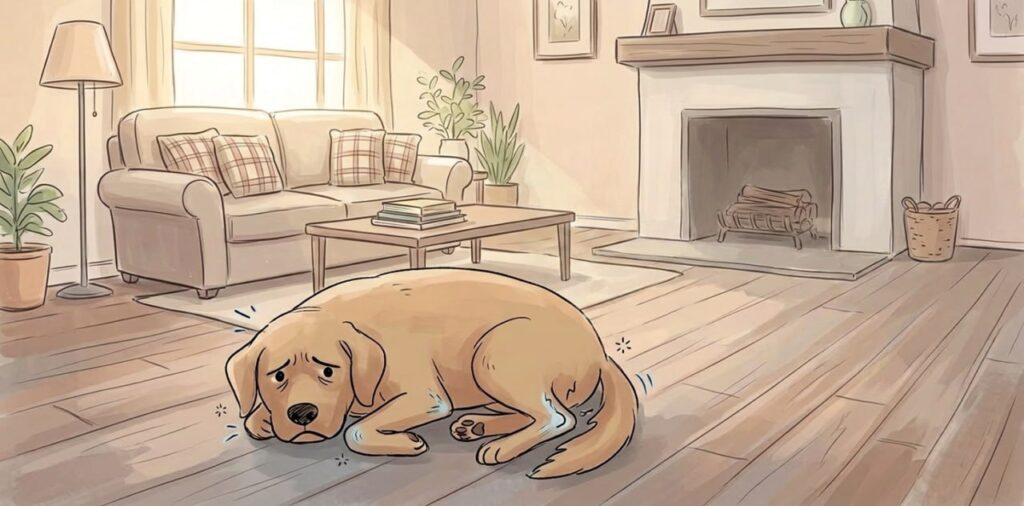
Why cold tiles and concrete make poor bedding for dogs and cats
Many dog and cat owners notice that their pets sometimes seek out a spot on bare tiles or concrete. In the summer, this is often quite normal, as the cool surface helps to regulate body temperature. Animals that have a choice will move around constantly on hot days – cooling off for a while, then seeking out a more comfortable and warmer option again.
The trouble arises when cold tiles or concrete are the only option for laying down. This sometimes happens to dogs with very caring owners too, for example on a trip or outing. Then the dog goes along to the restaurant or bar and lies on the floor. It's true that their fur protects them, but this can be a problem as the dog isn't used to a cold surface or is already suffering from an inflammation that we haven't noticed. Then it won't settle down, and we might unknowingly force it to lie on the bare floor.
You yourselves surely want to avoid constant visits to the vet and a vicious cycle that does not lead to improvement.
The following explains the main reasons why you should always and everywhere ensure a warm surface and why some breeds are particularly sensitive to the cold today.
Cold floors quickly draw heat from the body
Tiles and concrete have a very high thermal conductivity. This means that they quickly absorb heat from an animal's body. If a dog or cat lies on such a surface for a long time, the lower part of its body can cool down, especially:
- belly
- joints
- regions around the bladder and reproductive organs
Although the room is heated, the surface of the tiles can remain significantly cooler than the animal's body temperature. Prolonged contact with such a surface is therefore not ideal, and this is naturally much worse in winter.
Treat your furry friend to a choice, set them up with a comfortable bed, one that they also have outside in dry weather. You will find high-quality beds that are also easy to use here.
Risk of urinary tract infection
Cooling of the lower body can contribute to urinary tract problems, especially in smaller or short-haired animals. Cold can cause reduced blood flow to the bladder area, weakening the body's local defences. Consequently, bacteria in the urinary tract may be more successful at multiplying and inflammation can develop or worsen more quickly.
Urinary tract infections are often difficult to notice
One of the biggest problems with urinary tract inflammation is that owners often only notice it late. Dogs and cats can act almost completely normally for a long time, having an appetite and behaving as usual.
Among the first signs can be:
- more frequent urination
- passing small amounts of urine
- prolonged squatting or straining during urination
- urination in unusual places
- excessive licking of genitals
With cats, the only sign can also be that they visit the cat litter box more often.
Tip: If you suspect your puppy has a bladder infection, make an appointment with your vet. They will likely ask you about the problem and guide you. If you've only been given an appointment, collect some urine in a zip-lock bag or container during a walk. The first morning urine is best, and you should take it to the vet as soon as possible. This will speed up the process of starting treatment and help your puppy get better faster.
What happens if inflammation is left untreated
If a urinary tract infection or UTI is not detected and treated promptly, it can lead to more serious problems and complications.
Possible consequences are:
- chronic cystitis
- the formation of crystals or urinary stones
- blockage of blood vessels
- spread of infection to the kidneys
In cats, urethral obstruction is particularly dangerous and can quickly become a life-threatening condition.
Cold can worsen existing inflammation.
If the animal already has a urinary tract infection, lying on cold tiles for a long time can worsen the condition.
Cold causes:
- narrowing of blood vessels and poorer blood circulation
- increased irritation of the bladder lining
- increased sensitivity and pain
The animal may start to urinate more frequently, strain, or show signs of discomfort.
Hard surfaces are not good for the joints either.
Besides temperature, the hardness of the floor is also a problem. Concrete and tiles have no elasticity.
Prolonged lying on such surfaces can cause:
- greater pressure on the elbows and hips
- thickened skin on joints and hairless areas
- greater problems in older dogs with arthritis
Larger breeds are even more susceptible to joint problems. A softer base relieves pressure on the joints and allows for quality rest.
In dogs that spend most of their time lying on a hard, cold surface, owners often notice more quickly:
- difficulty getting up after a rest
- stiffness after sleeping
- limping
- slower walking or less desire for walks
- difficulties jumping (e.g. into a car)
- more sleep or withdrawing from activities
Modern breeds are often more sensitive to the cold.
In the breeding process, many breeds were developed primarily for their looks or temperament, rather than for their resilience to environmental conditions. Consequently, some breeds have:
- hair removal
- fairer skin
- poorer thermal regulation
This means they can feel the cold more quickly and are more susceptible to problems related to cooling the body.
What surface would animals choose in nature
In the wild, dogs and cats almost never lie for long on bare rock or very cold surfaces. They usually choose surfaces that offer at least some insulation, such as grass, earth, sand, leaves or moss.
Such surfaces are softer and do not dissipate heat as quickly as tiles or concrete.
As your pet cannot look after itself and wouldn't want to live without you anyway, you are responsible as its ‘parent’ to ensure it is pampered and do everything in your power to make it feel well and healthy in your care.
The best home solution
The most important thing is that the animal always has a choice.
Ideally, it should have:
- a soft mattress or a blanket
- warmer floor without draughts
- the option to move to a cooler part of the floor in the summer
This way, he can regulate the temperature himself and choose the bedding that suits him best.
If you look after them at home, make sure you look after them when you’re out and about too
A pet that has a warm and soft bed available at home all the time can be even more sensitive when it has to lie on a cold surface for a long time. Think about this even when you are out of the house, for example, when your pet is walking with you around town and you then sit down for a coffee. Ensure that your pet's paws are always comfortable and they won't have unnecessary health problems.
For a day trip and a coffee, of course, you won't take your pet's bed, but you can offer them a blanket for that time and observe whether they settle down more easily, or if they are more comfortable ... You can find the cutest blankets and other soft things for your furry friends' comfort at the BF store.
May your paws always be happy, healthy, and ready for new adventures with you.